The Red Sea is home to some of the most spectacular marine life around the world, which attracts divers and snorkelers from across the globe. While most underwater creatures are harmless when left undisturbed, a few species can sting, bite, or defend themselves if threatened.
Knowing which animals to be aware of can help you stay in a safe distance from them and enjoy your time underwater. In this guide, we’ll introduce 10 of the most dangerous creatures in the Red Sea and explain why they deserve your respect.
10 Most Dangerous Creatures in the Red Sea
Most marine life in the Red Sea is harmless and will not bother you if you simply observe it from a safe distance. However, a small number of species can sting, bite, or defend themselves when disturbed.
Knowing which creatures to watch out for can help you enjoy scuba diving and snorkeling safely. Below, we’ll take a closer look at 10 most dangerous creatures in the Red Sea that deserve extra caution, including:
- Scorpionfish and Stonefish.
- Muray Eels.
- Lionfish.
- Blue Spotted Stingray and other rays.
- Trigger Fish.
- Sharks.
- Sea Urchins.
- Fire Coral.
- Cone Shells.
- Puffer Fish and other dangerous fish and animals.
Scorpionfish and Stonefish
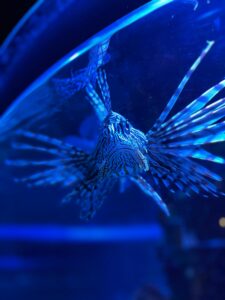
These fish features sharp spines besides with a poison gland located on their backs. They use them in defending. If the fish feels threatened, they straighten their spines.
In addition to that, these fish are considered one of the dangerous creatures in the Red Sea because it is hard to distinguish them at first glance from the reef surrounding them, where they tuned for their prey (which are small crustaceans and fish). A stonefish can be hardly be distinguishable from a stone.
That’s why scuba divers should be careful not to step on such a fish even by accident and better to avoid touching the reef at all when practice scuba diving in the Red Sea. The Red Sea Walkman (Inimikus filamentosus) is considered one of the interesting species of scorpionfish.
It uses three rays of its front fins (that look like claws) in walking along the sandy bottom. It spreads the colorful pectoral and tail fins, resembling butterfly wings to warn their enemies. This fish is considered very poisonous.
As first aid when getting injured, you should immerse the affected area in hot water (60°-70°) for several hours, this technique denatures the protein component of the poison. This is a very painful injury, so take painkillers. Fatal cases are also known! An improper reaction to pain underwater can be dangerous for scuba divers.
 Muray Eels
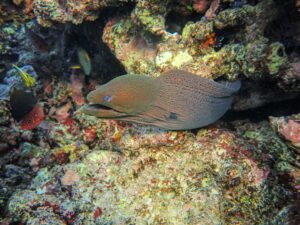
Moray eels may seem intimidating because of their body shape that resembles that of snakes. Their skin is scaleless and covered with a layer of mucus. Morays have no pectoral fins, both the anal and dorsal fins are connected and build a border along the length of the entire body.
The giant moray is the abundant type in the Red Sea. It grows until reaching 3 meters in length. Moray eels don’t attack humans in normal cases and do not have venomous teeth or spines.
However, if they feel threatened, they may bite you painfully with their sharp backward curved teeth. Moray eels feed on smaller fish, they mainly hunt at night, you may spot then while scuba diving in the Red Sea during the day especially in the holes of the reef.
Lionfish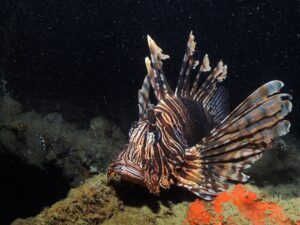
Lionfish also regarded as one of the scorpionfish members. They have different appearance and way of life, but they all have a dorsal fin equipped with poisonous spines.
Lionfish usually be seen “sitting” up side down under various overhangs found in the cliff during the day. In the evening, they hunt for their prey (which are usually small fish and small crustaceans). These hunters often live in shipwrecks.
As a first aid in case of injury, immerse the affected area in hot water to denatures the protein component of the poison. And take painkillers, because it is a very painful injury.
Blue Spotted Stingray and Other Rays
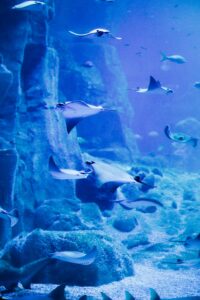
Stingrays belong to fish, but instead of bones in other fish, they have cartilage, which responsible for the flexibility of their body. While snorkeling or scuba diving in the Red Sea, you can spot a widespread blue-spotted stingray, which feature two poisonous spines on its tail for defending themselves from predators.
Their prey include small crustaceans and fish in the sandy bottom. During the winter months, larger ray species, the feathertail stingray ,for example, can be impressive because of their size.
Its massive tail features poisonous spines. Meeting a leopard stingray can happen. And There is also the torpedo ray, which hunt their prey (such as small crustaceans, mollusks, and fish) by electric shocks.
Trigger Fish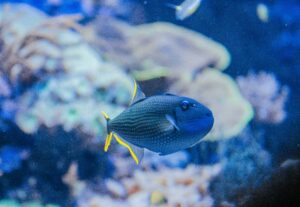
Trigger fish are among the most aggressive and dangerous creatures in the Red Sea, especially in the period from july to September, during their breeding season. The trigger fish its funnel-shaped nest in the sandy bottom and defends the entire water column above it to the surface.
Therefore, if you enter its territory, it is recommended to be in a horizontal position and use your fins to protect yourself. It is a common thing that a fish bites into a diver’s fin. The titan triggerfish, which can be considered the most aggressive fish in out list of the 10 most dangerous creatures in the Red Sea, can reach 75 cm in size.
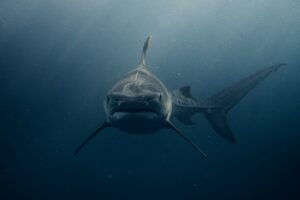 Sharks
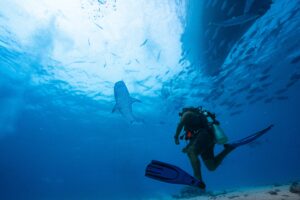
Sharks are also classified as fish. Sharks are on the top of the most dangerous creatures in the Red Sea that you can usually see around reefs in the open sea, where you can reach on safari boats. The species you are supposed to see are tiger stark, whitetip oceanic shark, and hammerhead shark.
Some species feed on turtles and sick dolphins at the surface, which can be considered potentially dangerous. Smaller sharks, such as whitetip reef shark are shy. Shark attacks aren’t a common thing in Egyptian part of the Red Sea.
There is no information about a scuba diver being attacked by a shark around Hurghada. But snorkeling with sharks isn’t a recommended thing.
Sea Urchins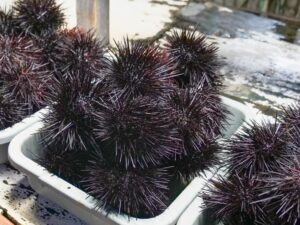
A sea urchin is one of the dangerous creatures in the Red Sea that can cause injury to you, especially when entering the water. Sea urchins live among stones, and the pricking of its spines into a bare foot is the most common injury.
It is a very painful injury, its spines are very fragile, so you can’t pull them out of the wound with your own strength. You will feel pain in the first 3 days, then it will go away, After the first 3 days, the remaining parts of the spines will be absorbed by the body.
As first aid for the injury, Immerse the affected part in hot water. Next, be careful when removing the visible spines with tweezers. They are fragile and part of them often remains in the wound. Put antiseptic solutions or OTC (over-the-counter) antibiotic ointments. Visit a doctor if there is a risk of subsequent infection.
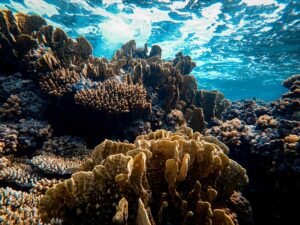 Fire Coral
Corals themselves can be regarded one of the dangerous creatures in the Red Sea, as they can cause very painful burns that take many days to heal. Also, avoid breaking corals as souvenirs and ensure not to snorkel over too shallow coral reefs in Egypt.
As a first aid for a coral injury, treating with a weak acid, such as vinegar and lemon is the best choice, then scrubbing it for a long time. Ensure to keep the wound clean and dry, and take painkillers in case of feeling pain.
Cone Shells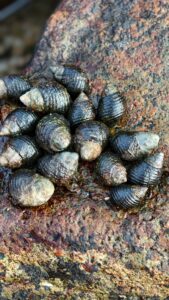
Cone shells pose the greatest risk. They are sea snails that live inside an attractive conical shell. Most of the time, you will find them buried in the sand with only their waving siphon visible, which fish may easily mistake for a worm.
The snail has a poisonous barb by which it hits the fish to keep it at a safe distance, This barb is connected to its body by a long thread.
Venom of some species of cone shells consists of a highly effective mixture of nerve poisons – conotoxin, which also contains substances that cause acceleration of the heart’s activity, which guarantee a quick and fatal effect. For these reasons, collecting shells of marine animals is a disaster, because this snail is nocturnal animal.
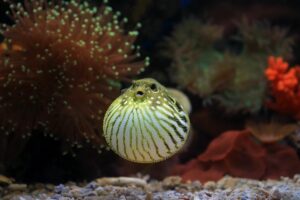 Puffer Fish and other dangerous fish and animals
Some dangerous fish, such as buffer fish, Porcupine fish and solescan produce toxins to defend themselves. There is a risk of poisoning when ingesting the fish after unprofessional preparation as food (fugu fish). Catfish also has poisonous spines in its dorsal and pectoral fins. Its sting is extremely painful.
As a first aid, immerse the affected area in hot water. It is common to see large groups of young fish searching for food in the sand. For the poisonous spines of the Thorns starfish, use cortisone ointment as first aid for skin irritation. Visiting a doctor is necessary to remove the thorns from the wound.