When you plunge beneath the waves, your scuba tank becomes your lifeline—your gateway to the underwater world. Whether you’re a seasoned diver or just a novice one, understanding your tank is just as crucial as mastering your buoyancy or perfecting your fin kicks.
This guide will take you through the essentials: from tank types and materials to maintenance and safety tips. You’ll learn how to choose the right tank for your diving needs, how to extend its lifespan, and why proper care ensures every dive is safe and easy.
Ready to dive into the details? Let’s explore everything you need to know about scuba tanks and how they fuel your adventures beneath the surface!
Facts about Scuba Tanks
The scuba tank is regarded as one of the essential parts of SCUBA (Self-Contained Underwater Breathing Apparatus) diving. The tank is what provides you with your high pressure breathing gas to be able to breathe underwater.
Your tank is also the gear in which the breathing gas is stored. For this reason, your scuba tank is regarded as one of the most important pieces of gear you should ensure to take with you beneath the waves.
Some new scuba divers call diving tanks “oxygen tanks,” but in fact, scuba tanks are usually filled with an oxygen-rich air mix instead of pure oxygen. Most tanks contain 0.11 to 0.64 cu ft and have a maximum pressure rating which is nearly 2,900:4,400 psi (200:300 bars).
Besides using it in the water, you can use it above water to treat diving disorders as well as for first aid.
In fact: American scuba divers usually call them “diving tanks” or “scuba tanks” but British divers and some international divers prefer “diving cylinders.” They are two different names, but have the same equipment.
Many divers prefer renting their scuba tanks (at least at first). On the other hand, when you buy your own, that means you should maintain it. Owning your tank is crucial to dive far from the rental shop. Owning a tank ensures availability during tourist season.
History and Evolution of Scuba Tanks
Early divers relied on air-filled animal bladders to extend their time while being underwater. Fast forward today in addition to the technological advancements over the years offer durable, efficient tanks we have today, which provides us with greater depths as well as longer dive times.
Choosing the Right Scuba Diving Tank
Understanding the differences between the variable types of tanks will help divers to choose the right choice for your diving needs. There’s a suitable size for every one. Each dive needed to be varied, and so do tanks.
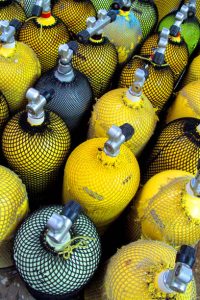
Scuba tanks can be made from steel or aluminum, and top brands, such as Faber, Catalina, XS Scuba, and more can carry the top tanks in the market.
These types of tanks include:
Aluminum Tanks
Aluminum tanks are more popular for both beginners as well as recreational divers, as they are considered cheaper than steel tanks. Aluminum tanks are also considered more resistant to corrosion and rust than steel ones, as a result, they have a long lifespan. Aluminum-80 for example is the most common tank in rental shops.
On the other hand, you can change yours according to how much the tank is full. An empty aluminum tank will have positive buoyancy, and float as the gas is used.
So, the diver will need to wear more weights on the belt to compensate for that and to reach neutral buoyancy. Aluminum’s softness makes it more susceptible to dents.
Steel Tanks
Although each steel cylinder has different capacities, some for sure can carry more gas than the enormous aluminum cylinders. They’re tough enough and built to deal with any dive conditions.
Steel tanks have negative buoyancy and while consuming air, they become neutrally buoyant. This means you have to minimize your weight to be lighter than aluminum tanks.
They last longer than aluminum ones and are a top choice for professional scuba divers. However, if you don’t care for yours, steel ones are more susceptible to rust in case of diving in salt water, and its maintenance will always be a must.
But with regular care, this can make it have a longer lifespan. They are also considered more expensive than aluminum ones. It’s a choice between two good options, each one has their own strengths!

Pony Tanks
Divers prefer single tanks with a pony setup. Think of them as mini backup air tanks that used to be attached to your diving gear. It comes with regulators and sometimes gauges.
If you have ever suffered from a problem with your main gear or used up your air rapidly, this little buddy makes sure you have enough air to surface again. While being super handy, you should remember it’s essential for emergencies, not just for prolonging your underwater adventures.
Understanding Scuba Tank Capacity: How Long Can You Stay Underwater?
The tank’s capacity determines the gas’s amount (in cubic feet), because it can contain at its designated pressure. Most recreational scuba tanks can make you reach from 50 to 80 cubic feet. Tanks having larger capacities can provide you with more air to the diver, which in turn allows you to go underwater for longer periods. But remember, your air consumption rate is also a key.
The aluminum 80 is cost-effective and holds enough air for most divers. However, Smaller or younger divers and those on short, shallow dives may find the aluminum 80 too bulky. A more fitting option for them may be a more compact cylinder such as that of the aluminum 63.
Divers who prefer delving into deeper or longer dives or even those who tend to use up air quickly may buy or rent tanks with larger capacities, such as an aluminum 100 capacity, which can make them enjoy more time underwater.
Determining the proper cylinder size requires you to consider important things such as the weight of the cylinder, your gas consumption rate, the needed diving depth and duration, the ease of handling, in addition to potential gas requirements when needed to share with a dive partner during emergency situations.
If large aluminum tanks don’t provide enough air, switch to steel tanks or setups with multiple tanks.

The Importance of Tank Pressure
Scuba tanks are made with a specific maximum pressure capacity, which you can measure with PSI (pounds per square inch), and can be divided into high pressure (HP) or low pressure (LP).
The pressure’s intensity determines the level of air compression in your tank. Higher pressure requires thicker, stronger tank walls to ensure safety. In general, the pressure rating of the tanks range from 2000 to 3500 psi. For example, most aluminum scuba tanks are designed for 3000 psi.
High vs Low-Pressure Tanks
Most aluminum tanks are low-pressure. Although they are larger in size, they contain less air than high-pressure ones. For example, A 3000 psi tank holds more air than a same-sized tank at 2400 psi.
Steel, which is more robust than aluminum, needs less material to be able to store air at 3000 psi safely. This caused the steel 80 tank to be lighter than the aluminum 80, especially when transporting it to the ocean or boat.
When you consider steel diving tanks, scuba divers can choose high or low-pressure choices. Steel tanks have high pressure compressed air more densely. That makes them smaller than standard-pressure tanks which have equal air capacity. Because of their compactness, it can be significant for petite or beginner divers who may experience discomfort from larger tanks which touch their bodies underwater.
Furthermore, in general, High-pressure tanks need frequent maintenance since higher pressure accelerates wear, especially on O-rings and valves. These parts often need more frequent replacements in tanks with high pressure. Notably, most of the high-pressure dive tanks are considered compatible with the setups of DIN regulator.
Valve Systems
The valve which is the heart of a scuba tank determines the proper way to connect your regulator. The valve is related to the neck of the scuba tank, and its primary role is to control the airflow from the cylinder to the first stage of the regulator. They are regarded as the connection point to your lifeline underwater!
Types of Valves – DIN and Yoke Valves
The valve needs to be connected to the regulator to make sure that your tank functions properly. DIN (which is the acronym for Deutsche Industrie Norm) and Yoke are the two primary types of coupling fittings that link the tank to the initial stage of your regulator’s.
Yoke Valves
Yoke connection fittings are commonly used in the US. They are the standard fittings for aluminum 80 tanks and are commonly included with rental tanks.
Yoke valves are easy to attach and remove but remain external to the tank’s neck. While being the preferred choice for many recreation divers, this external placement may cause them to be less stable under extreme high pressures.
DIN Valves
DIN valves which is popular in Europe can offer you with a more secure connection and suit deeper dives. DIN valves are set deep within the tank. Tech and deep divers favor them for their secure connection.
DIN coupling fittings are essential for tanks with high pressure and are also considered safer than Yoke varieties. Using a DIN coupling fitting makes the O-ring cannot stick out, as the fitting screws right into the valve of the tank which in turn keeps the O-ring in place.
Aluminum tanks typically use yoke valves, while steel tanks, especially high-pressure ones, often have DIN valves. Divers should consider which style of tanks they will choose to use when you invest in a scuba regulator.
Filling Your Scuba Tank: It’s Not Just About Air
There are about 3 key elements that can influence the air available to a diver in a scuba tank which are tank size, personal air use, and dive depth.
Tank Size
As discussed above, a the size of the tank size is important. Generally, a tank with a larger capacity will provide you with a sufficient air for a longer duration.
Many non-divers think scuba tanks contain 100% oxygen. Scuba divers never use pure oxygen as oxygen can become toxic as pressure increases above a certain point. In reality, recreational divers usually use filtered and compressed air (which contains 21% oxygen in addition to 79% nitrogen).
Technical divers who are diving in deep waters prefer using enriched air nitrox, which have more oxygen (ranging from 22% to 40% oxygen, with nitrogen) and allows for longer bottom times. Make sure you have the proper certification to use nitrox and understand the benefits as well as the limitations.
Diving Depth
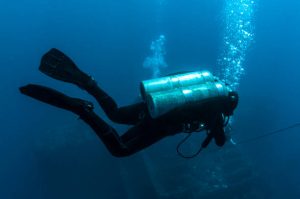
The deeper you descend, the more air you consume. Tank air stays stable until it reaches the breathing apparatus, where it’s further compressed.
This means during a specific time, for example five minutes underwater, a diver can utilize more air than they should at the same time above the surface. Thus, as you go deeper, the available air depletes rapidely.
Personal Air Use
There are different factors that can dictate the amount of air per breathe that you should consume, such as height, emotional state, weight, and physical activity.
For example, a taller one needs more oxygen per breath than a shorter one. Similarly, a. anxious or stressed diver will breathe quicker, depleting the tank more rapidly than a calm and composed diver.
Maintenance and Care of Diving Tanks
Regular care of the tank ensures both its longevity and safety.
Regular Inspections
Tank inspections keep you prepared for safe diving. Make sure that your tank undergoes visual inspections every year via a qualified visual cylinder inspector in addition to hydrostatic tests every five years.
Hydrostatic testing is essential to maintain the tanks’ reliability and, therefore, imperative to keep you safe. Dive cylinders display their last hydrostatic test date.
Proper Storage
Rinse your tank with fresh water after diving and store it in a cool, dry place away from sunlight to extend its lifespan. Consider your tank’s vintage wine; proper storage is vital to longevity.

Scuba Tank Buying Guide: What to Consider
Buying you own scuba tank is an investment. However there are some factors to keep in mind. Consider factors such as material, capacity, weight, and your diving style. No matter your diving style, there’s a tank that fits your needs.
Your Dive Profile
Your diving level determines the tank type and features you need.
Budget and Brand Preference
There are several brands of tanks that can offer various price ranges, so do research and see reviews until you determine what suits your pocket and needs.
The Environmental Impact
Our oceans are invaluable. While diving offers a unique way to experience their beauty, it’s very important to dive sustainably. And don’t forget that your tank plays a vital role in this!
Be cautious about which place you place the tank in. Preserving underwater ecosystems is essential—avoid harming marine life or reefs and dive responsibly. Recycle instead of discarding. An old tank could become your next dive bell.
Conclusion: Embracing the Deep Blue with Knowledge

Understanding your scuba diving tank will enable you to maximize your dive time, while being safe, and responsible. The deeper you know, the deeper you can dive, literally and figuratively. So, suit up, dive in, and immerse yourself in the breathtaking underwater world. And with your tank, you can keep enjoying the view.