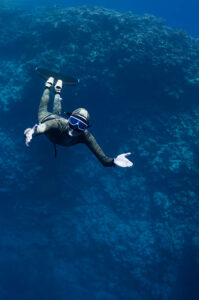
Night diving offers a thrilling way for the adventurous to see the ocean from a whole new perspective. When the sun goes down and it gets dark, the ocean becomes quiet and interesting in a new way. However, there are some risks in night diving and you need to consider some precautions to stay safe.
Before delving into a night dive adventure, you should have the proper preparation and information. From understanding the potential night diving risks to familiarising yourself with the adequate equipment and techniques, you should consider several essential factors.
Let’s learn together in this article about the night diving risks and how to make the essential preparations for this thrilling underwater adventure.
Understanding the 6 Potential Night Diving Risks
It is crucial to understand the night diving risks and make the essential preparations to mitigate them for a safe and enjoyable scuba diving experience.
We have 6 potential night diving risks. Let’s list them, then discuss them in the following lines.
- Limited visibility.
- Disorientation and loss of direction.
- Unexpected marine life behavior.
- Buddy separation.
- Increased risk of panic or anxiety.
- Equipment failure goes unnoticed.
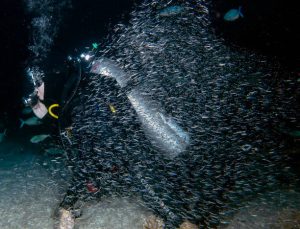
Limited Visibility
Unlike diving in the daytime -in which the sunlight reveals your surroundings- night diving mainly relies on artificial light sources. You have a tunnel-like field of vision, and this increases the possibility of losing orientation or missing obstacles.
Mitigation: Carry a primary dive light and a backup one. Scan your surroundings by sweeping your light slowly and ensure to adhere to your dive buddy within visual range.
Disorientation and Loss of Direction
In night scuba diving, you can lose track of depth, direction, or even your way up easily (especially while ascending or descending) as a result of the lack of sunlight or clear reference points.
Mitigation: Train on how to use your compass in navigation and practice natural navigation by the use of the underwater features. Keep controling your buoyancy and monitor your dive computer frequently to prevent any unintended ascents or descents.
Unexpected Marine Life Behavior
At night, you can encounter nocturnal species while other species become more defensive or inactive. This shift can lead to surprising or even startling encounters.
Mitigation: Stay calm and don’t move your torch vigorously. Observe istead of interfering. Do your research on the local nocturnal marine creatures you may spot.
Buddy Separation
You can become separated easily due to poor visibility. Once you become out of sight, reuniting in the dark can be a major challenge.
Mitigation: Agree on pre-dive signals and separations protocols with your dive buddy. Maintain visibilty with the gelp of tank lights or reflective markers. maintain simple and frequent communication.

Increased Risk of Panic or Anxiety
You may suffer from high psychological stress when diving in darkness, especially when you aren’t mentally prepared. Panic at depth is a big danger.
Mitigation: Practice night scuba diving only when you become comfortable with your scuba gear and diving in general. Breathe slowly, stay relaxed, and be prepared on what to expect. If it is your first dive, ensure to conduct it with someone experienced.
Equipment Failure Goes Unnoticed
In the dark, you may not recognise any light dying or an air leak immediately. As a result, the problems you would see instantly during the day can become hidden threats at night.
Mitigation: Inspect all dive gear carefully before entering the water. Use your familiar equipment, and carry spares for all essential items, such as lights, signaling tools, and a second mask if possible.
What You Should Prepare for Night Diving
Before you dive into darkness, ensure to be ready for the challenges that come with it. Prepare for night diving by the following:
- Necessary Equipment and Techniques.
- Mental Preparedness.
- Be Gear Savvy.
- Brush Up On Compass Skills.
- Practice Going Slowly.
- Dive It During The Day.
- Dive with a Buddy.
Necessary Equipment and Techniques
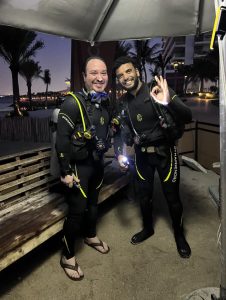
One of the important things you should do to overcome night diving risks is to make sure you have the right scuba equipment for your night dive. These items include reflective surface markers, a reliable dive light, backup lights, and a glow stick for emergencies.
In addition to that, You need to perfect your buoyancy control and communication techniques with your buddy to ensure having a safe night dive.
Don’t depend only on glow sticks for safety, as their main job is to mark your gear so other scuba drivers can spot you. For emergencies, carry a backup light that works and is easily accessible.
Mental Preparedness
You can feel scary in your dive night experience, so it is important to have the proper mental preparedness for the unique environment with its potential challenges, for example:
- Ensure to feel comfortable with your scuba gear.
- Maintain spatial awareness.
- Stay calm in poor visibility.
Be Gear Savvy
With night diving, you have an extraordinary perspective of the underwater world, but your safety mainly relies on thorough equipment checks.
- Ensure having full charged primary and backup dive lights and also to function properly. Don’t forget that your lights are considered your lifeline in the dark.
- Remember to bring a surface marker buoy (SMB) as well as an audible signalling device, such as a whistle in order to enhance visibility and communication at the surface.
- Purchase a well-fitting mask that offers a wide field of vision and doesn’t fog easily.
- Wear a suitable wetsuit for the water temperature; if you feel cold, you will be distracted.
- To enhance the visibility underwater, add reflective tape to your scuba fins or tank.
- To preserve the heat of your body, wear a hood or beanie, as this will offer added protection from any unexpected bumps in low light.
- Double-check every piece of your scuba equipment before descending, faulty equipment will put you in trouble in the dark.
Brush Up On Compass Skills
Navigating underwater is a skill you should acquire as a diver, and it comes with high challenges when doing it in darkness, so it is considered one of the vital skills to overcome night diving risks. Check your compass skills before diving at night, and try them during the day if needed.
Take your time to collect information about the behavior of the dive compass under real conditions, then identify any natural landmarks that can be still detected at night, like coral edges, sand channels, or mooring lines.
To enhance your visibility and orientation, it is recommended to use a backlit or glow-in-the-dark compass. Proper navigation ensures a safe return to your entry point.
Practice Going Slowly
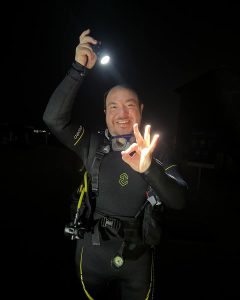
In night scuba diving, it’s crucial to move slowly with control. In the dark, you can hardly see any potential hazards or obstacles, so take your time and maintain a controlled pace to be safe. Moving slowly enables you to observe the different nocturnal marine creatures and enjoy the special sights that appear at night.
Besides physical preparation, it is vital to be mentally ready for night diving. Take your time to be prepared mentally before diving in this darker, unfamiliar environment. Ensure to be calm and focused to make the most of your night dive experience.
Dive with a Buddy
Diving with a buddy is key to outswing night diving risks. Your dive buddy adds an extra layer of safety and support especially in emergencies or unexpected situations.
Stay close to your dive buddy, have good communications, and agree on clear signals to stick together in low visibility.
Choosing the proper gear, preparation, skills, and mindset will guarantee having safe and rewarding night scuba diving adventures. Enjoy the underwater beauty that comes alive at night.

Dive It During The Day
Before visiting a new site for a night dive, check the dive spot in the daytime to become familiar with entry/exit points, underwater topography, and any potential night diving risks, such as sharp corals, or surge zones. You’ll spot useful landmarks to help you find your way when it’s dark.
Exploring the site in daylight enabled you to observe the variable behaviors of marine creatures, Some of these might change a lot at night. Noticing these patterns makes your night dive safer and more fun.